
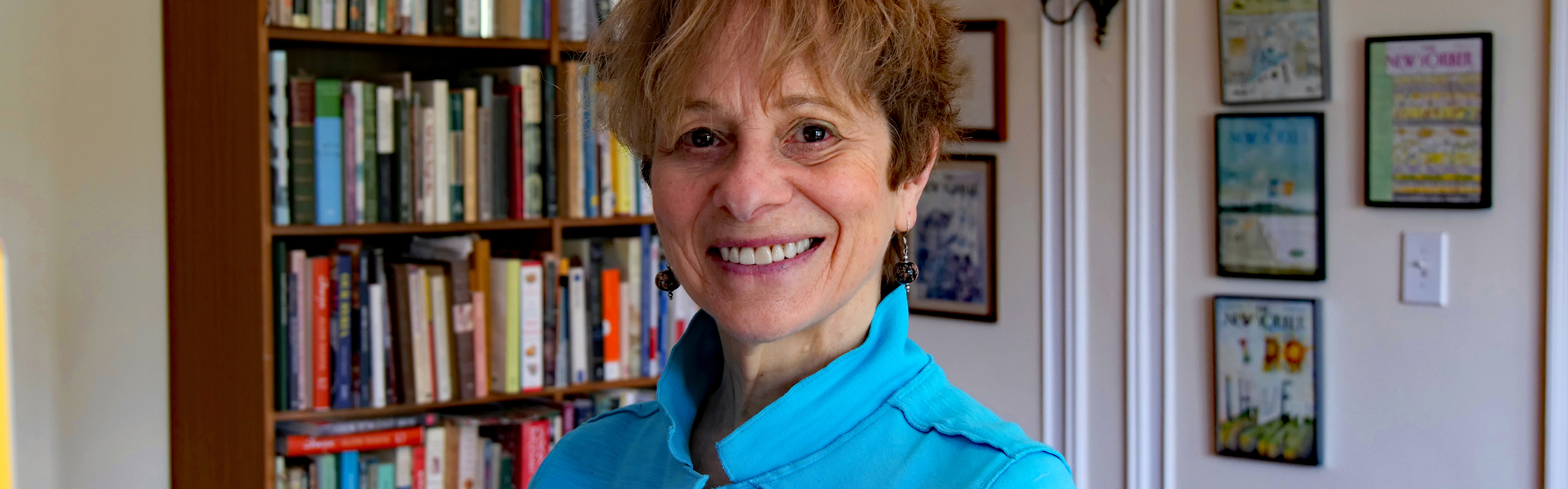
Deborah Stone is an award-winning author, political scientist, teacher, speaker, and essayist whose work has always centered on a fundamental human question:
how do we make meaning together?
Across a distinguished career in public policy, health care, law, ethics and social thought, Stone has explored the stories, values, and hidden judgments that shape public life. Her books examine how societies define need, distribute help,,build health systems, and measure worth of people and things. Again and again, her work returns to the power of language: the words we use, the categories we create, the stories we tell, and the human consequences of being understood—or misunderstood.
Her current project, Life in Translation, brings that lifelong fascination into a more personal form. A memoir about the deep human need to express ourselves and feel understood, the book explores language, learning, culture, identity, connection, and the surprising pleasures of becoming a beginner again. Drawing on Stone’s intellectual range, personal experience, and her gift for finding meaning and beauty in small things, Life in Translation invites readers to see language not as something we merely use, but as something wondrous we perform every day.
Stone is best known to generations of students, scholars, and policy thinkers as the author of Policy Paradox: The Art of Political Decision Making, winner of the American Political Science Association’s Wildavsky Award for a book that has made an enduring contribution to the field of public policy. Now in its fourth edition and translated into several languages, Policy Paradox remains widely used in a variety of educational and professional programs in the U.S. and abroad.
She is also the author of Counting: How We Use Numbers to Decide What Matters, which shows that numbers, far from being objective facts, are stories built of cultural assumptions, social conventions, and personal judgments. In The Samaritan’s Dilemma: Should Government Help Your Neighbor?, she explores how leaders can harness the human urge toward altruism to create a humane and flourishing democracy. The Disabled State traces how disability has been interpreted in three countries over five centuries, and explains why disability policy has always been so controversial. The Limits of Professional Power: National Health Care in West Germany portrays the German national health insurance system as an effective way to provide universal access to high-quality medical care.
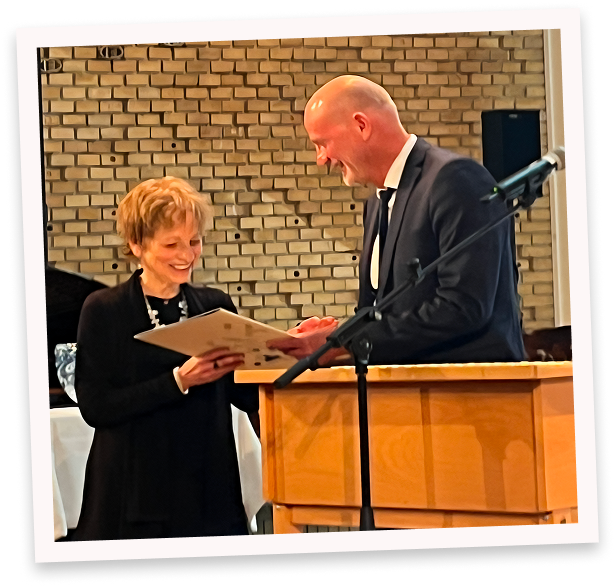
Stone received the James Madison Award from the American Political Science Association, a lifetime achievement award given once every three years to an American political scientist who has made a distinguished scholarly contribution to the field. She has also received an Honorary Doctorate from Aarhus University in Denmark, a Guggenheim fellowship, fellowships from Harvard Law School and the Kennedy School of Government, and awards for teaching and mentoring.
In addition to her books and scholarly publications, Stone has written extensively for broader audiences in publications including The American Prospect, The Nation, The New Republic, Salon.com, Boston Review, Natural History, and Natural New England, as well as in New Hampshire newspapers. She created and co-edited The Lempster Owl, a quarterly community magazine for her longtime hometown in New Hampshire. Many of her articles have been reprinted in anthologies, and her work has been translated into Spanish, Japanese, Chinese, German, French, Italian, Ukrainian, Lithuanian, and Estonian.
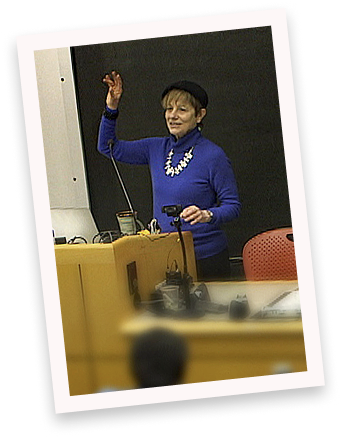
Stone’s public work extends beyond the page. She has delivered more than thirty keynote addresses, plenary speeches, and named lectures in the United States, Canada, Britain, the Netherlands, Germany, Austria, Poland, Denmark, Trinidad and Tobago, Taiwan, and Nepal. Her speaking and media experience spans academic and professional conferences, nonprofits, government agencies, legislative testimony, libraries, adult ed programs, podcasts, radio, and TV.
She co-founded the Journal of Health Politics, Policy and Law and has served as a consultant to the Social Security Administration, the Institute of Medicine, the Office of Technology Assessment, the Human Genome Project, and the NITI Foundation, a public policy research and advocacy institute in Nepal.
Stone holds a bachelor’s degree in Russian Studies from the University of Michigan and a PhD in Political Science from MIT. She has taught politics and public policy at Duke University, MIT, and Brandeis University, where she held the Pokross Chair in Law and Social Policy. She has also taught as a visiting professor at Yale University, Tulane University, and Dartmouth College, and at Aarhus University in Denmark.
In all her work—as a scholar, writer, teacher, speaker, and now memoirist—Deborah Stone brings uncommon warmth, intellectual curiosity, humor and luminescence to everything she touches. Life in Translation continues that work in a new key, asking what it means to speak, listen, learn, remember, and reach across the spaces between us.
