
The Disabled State
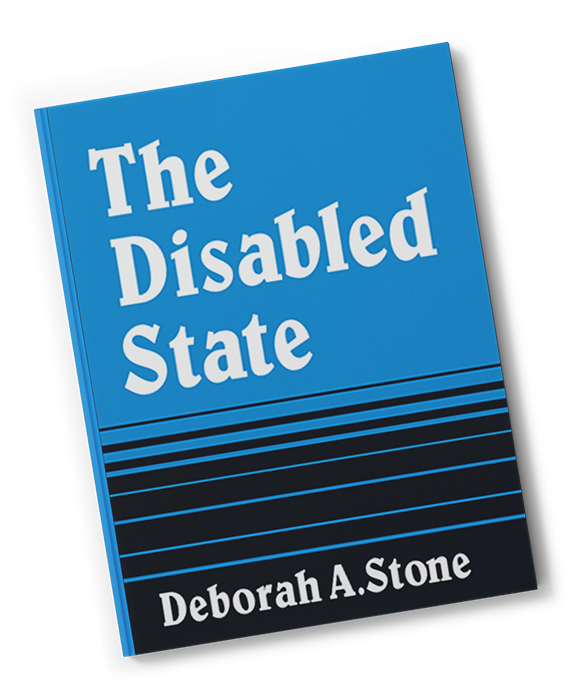
The idea for this book came to me at a time when disability insurance was proclaimed a crisis and the disability rights movement was taking off. Public officials sought to shrink the number of people with disabilities receiving public aid, while people with disabilities and their families sought equal rights to education, work, and public transportation.
I had a hunch that for both sides, “disability” isn’t a medical condition. It’s a moral view about what kinds of people deserve society’s help. The book traces that hunch through five centuries and three countries to find out where the concept of disability came from and why it has been interpreted so differently in different times and places.
“The concern with ‘welfare cheats’ is not a new one. The author reaches back several centuries to trace the fascinating history of this and other aspects of welfare policy in Germany, England, and the United States. What she finds are elaborate tests to weed out fraudulent applicants (beggars with faked afflictions) and changing criteria to distinguish the able from the ‘disabled.'”
– Goodreads reviewer
“Deborah Stone demonstrates that disability is a moveable social boundary whose limits depend on cultural consensus. Her elegant analysis has important implications.”
– Aaron Wildavsky, Professor of Public Political Science, University of California, Berkeley
“I highly recommend this book to those struggling with more holistic questions about the place of social aid in a market economy and democratic state.”
– Dwight Frankenfather, University of Chicago